
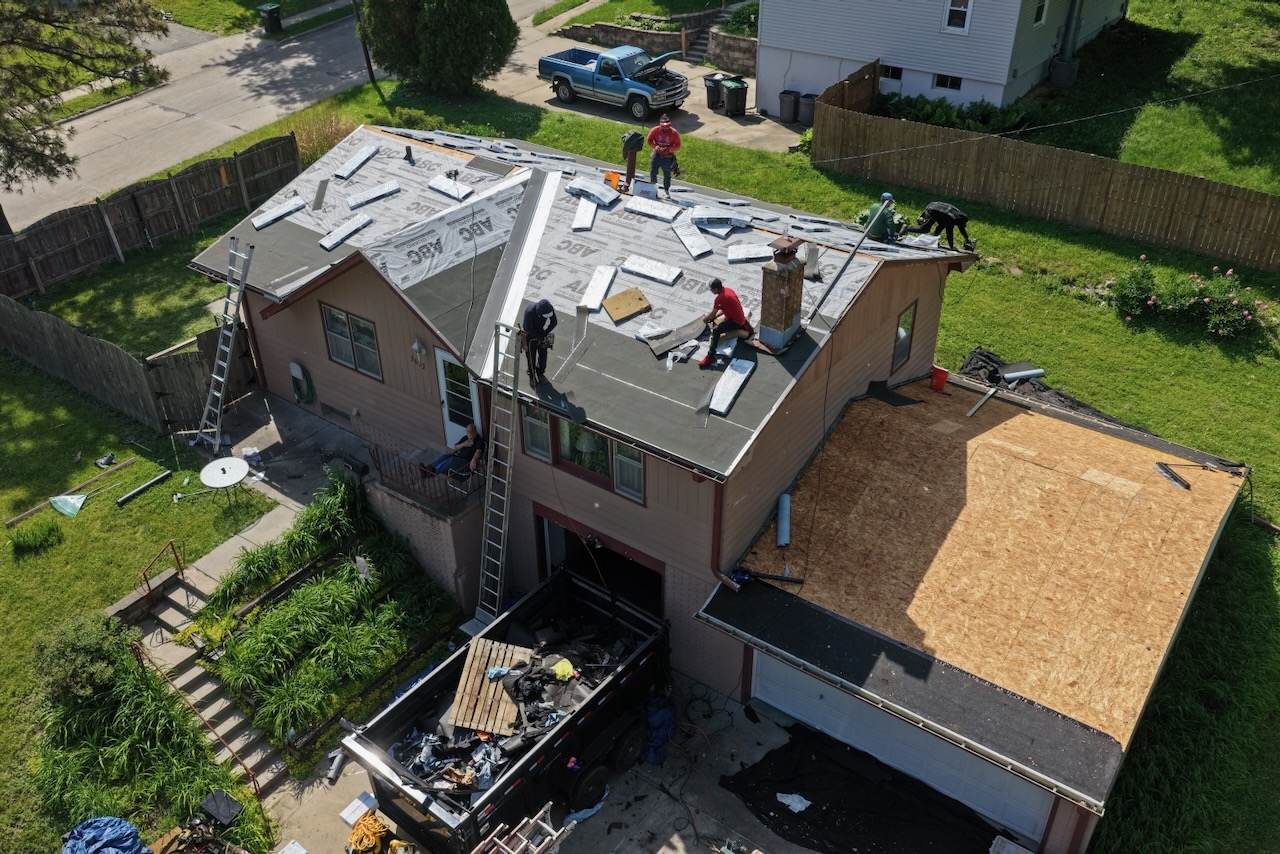
Nebraska storm seasons are notoriously harsh on residential roofing systems. While broken windows and dented siding are immediately obvious, hail damage on asphalt shingles frequently flies under the radar until interior water stains begin to appear months down the road.
1. Granule Loss and “Bruising” Hail does not always punch a clean hole through a shingle. Instead, stones impact the outer mineral layer, dislodging the protective granules. When granules vanish, the underlying asphalt substrate is exposed to direct ultraviolet rays, accelerating degradation. To inspect safely from the ground:
- Check your downspouts and gutter basins after heavy rain; accumulation of black or gray sand-like granules indicates heavy shingle impact.
- From an angled ladder view, look for dark dimples or spots where the surface texture appears indented or spongy.
2. Soft Metal Dents Roof accessories often provide the clearest evidence of hail strikes. Walk your property perimeter and inspect:
- Aluminum gutters and downspout extensions
- Metal roof vents, box vents, and ridge cap caps
- Metal flashing around chimneys and skylights
If your soft metals feature golf-ball-sized divots, your shingles absorbed the exact same kinetic impact.
3. Next Steps: Documentation and Professional Assessment Never walk a steep or damaged roof yourself. If your neighborhood weathered a storm with hail measuring one inch or larger, contact a licensed contractor for an on-roof evaluation. Identifying damage early simplifies insurance claims and prevents underlying decking rot.
Related reading: Learn more about our comprehensive Emergency Storm Damage Repair Services.